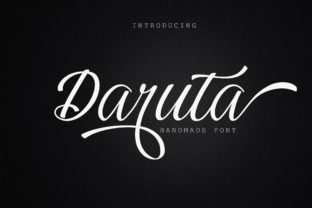
Daruta: A Fresh Handwritten Script Font
There I was, staring at a blank brand board, trying to find the right visual voice for a new boutique coffee shop. The client wanted something warm, approachable, and slightly edgy—like the kind of place where you’d expect to see hand-poured lattes and artisanal pastries. That’s when I reached for Daruta.
A Handmade Feel with Modern Flair
Daruta is a script font family that feels like it was drawn by someone with a steady hand and a love for calligraphy. It comes in four variations: Script, Slant, Bold Line Shadow, and one more I’m still figuring out. Each style has its own personality, but they all share that handmade quality that makes them feel authentic rather than overly stylized.
The base Script version has soft curves and gentle swashes that give it a classic calligraphy vibe. The Slant adds a bit of movement, making it great for dynamic headlines or social media graphics. The Bold Line Shadow version is the most dramatic, with thick strokes and subtle shadowing that adds depth without being too busy.
Testing Daruta in Real Projects
I first tried Daruta on a logo concept. The client loved how it felt like a signature, which made sense for a small, local business. But I also tested it on a packaging mockup for a skincare line. The bold version worked well for product names, while the slanted style added a playful touch to taglines.
On a business card, Daruta looked elegant but not over-the-top. It didn’t overwhelm the other design elements, which is important when working with limited space. For a website header, it brought energy and a sense of creativity, especially when paired with a clean sans serif.
One thing I noticed is that Daruta works best as a display or headline font. It’s not meant for long paragraphs of text, and that’s okay. Its charm lies in its uniqueness, not its versatility for body copy.
When Daruta Shines and When It Doesn’t
Daruta excels in branding projects that benefit from a personal, artistic touch. Think boutiques, cafes, handmade shops, or creative studios looking to stand out. It can add warmth to a logo, a sense of movement to a poster, or a unique flair to social media content.
However, it’s not ideal for formal corporate settings. In those cases, a more structured typeface would be better suited. Also, avoid using it in small sizes or for long blocks of text—readability becomes an issue, and the details get lost.
If you’re working on a project that requires multilingual support, check if Daruta covers the languages you need. Some script fonts have limited character sets, so it’s worth verifying before finalizing your design.
Pairing and Practical Tips
When pairing Daruta with other fonts, look for contrasts that highlight its strengths. A clean, modern sans serif like Montserrat or Poppins can balance its organic flow. A serif font like Playfair Display or Georgia can add sophistication without clashing.
For web use, make sure the font is available as a webfont. Many premium fonts come with web license options, which is essential if you're designing for online platforms. Always check the licensing terms before using Daruta in client work, especially if it involves commercial products or print-on-demand items.
Before committing to Daruta in a project, test it across different mediums. See how it looks on a shop sign, a product label, or a printed flyer. This will help you understand its strengths and limitations in real-world applications.
Final Thoughts on Daruta
Daruta is a versatile and expressive script font that brings a handmade feel to any design. It’s perfect for brands that want to communicate creativity, authenticity, and a personal touch. Whether you're working on a logo, packaging, or social media layout, Daruta can add a unique visual identity that stands out.
As a designer, I appreciate fonts that feel genuine and functional. Daruta fits that bill. It’s not just another script font—it’s a tool that can elevate your design work when used thoughtfully. If you’re looking for a fresh, modern handwritten typeface, Daruta is definitely worth exploring.